The 7 hilltop villages of the Luberon to see at least once
The Luberon hides some of France's most beautiful villages, clinging to rocky spurs as if they'd grown there naturally. These perched villages tell the story of a region where architecture adapts to terrain, where narrow alleys protect from the mistral, and where every stone seems placed with intention. Here are the s…
The 7 hilltop villages of the Luberon to see at least once
The Luberon isn’t a destination like any other. It’s a mountain range stretching east to west between Cavaillon and Manosque, a territory where history and geography have allied to create something unique: villages that seem to defy gravity, clinging to rocky spurs, their blonde stone houses stacked one atop another as if they’d grown there naturally.
Why are these villages perched?
The answer comes down to two words: defense and water. In the Middle Ages, perching offered protection against invasions and pillaging. But there was also a more pragmatic reason: by settling high up, inhabitants left the fertile valley lands for agriculture and took advantage of springs that often emerge mid-slope. The mistral, that violent wind that blows 100 days a year in Provence, also influenced architecture: narrow, winding alleys break its force, creating protected micro-climates.
Today, these villages have become sought-after destinations, some classified among France’s Most Beautiful Villages. But they remain living places, where you still encounter residents doing their market shopping, artisans in their workshops, and cafés where elders play pétanque under the plane trees.
1. Gordes: the Luberon icon
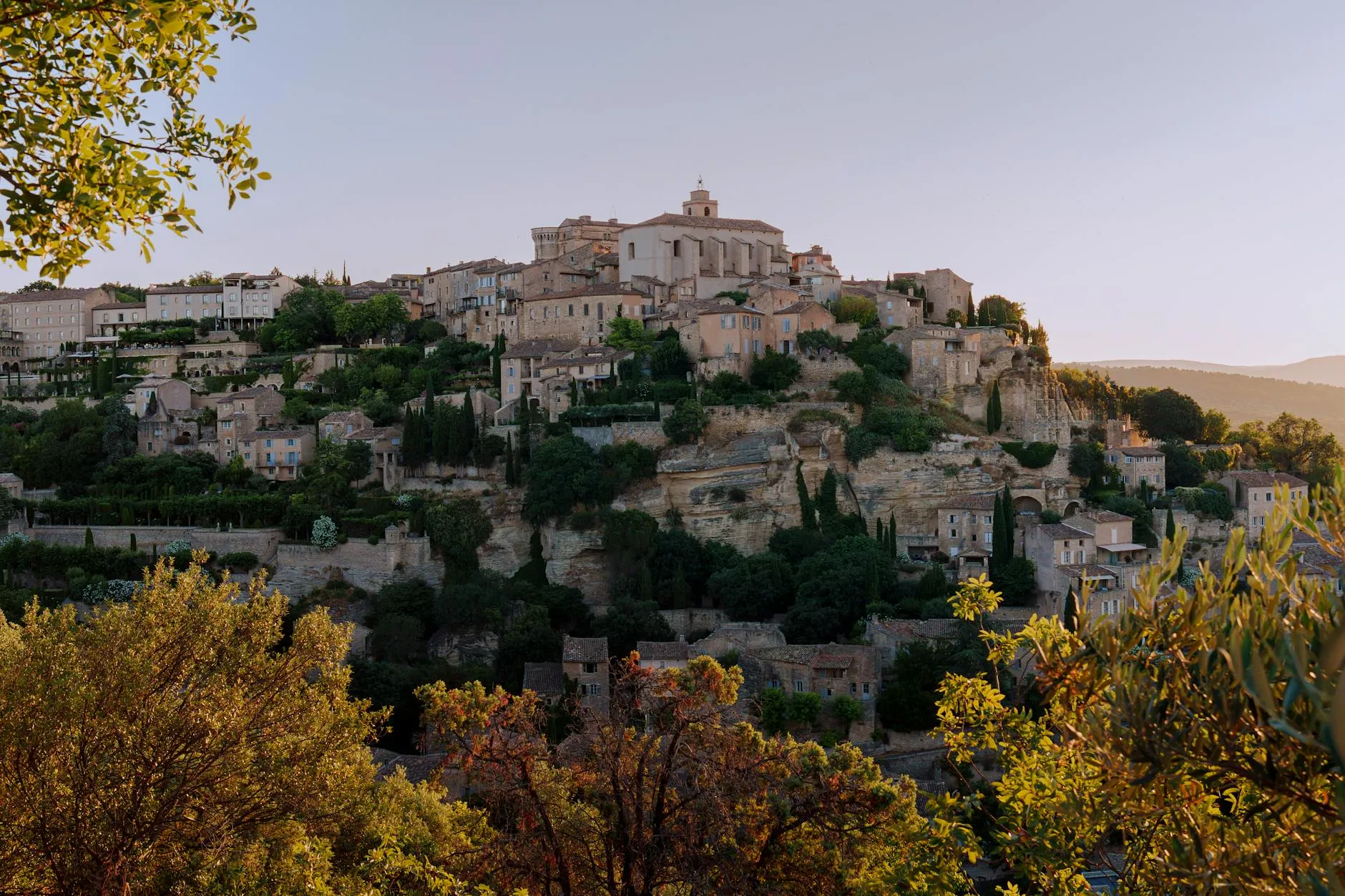
Let’s start with the most famous, the one whose silhouette adorns all Luberon postcards. Gordes is a spectacular village, its dry-stone houses stacked on a rocky spur overlooking the Calavon valley. Seen from afar, it looks like a cascade of blonde stone frozen in time.
What to see
The Renaissance castle sits at the summit, with its round towers and imposing facade. It now houses a museum and hosts temporary exhibitions. The Saint-Firmin church, with its square bell tower, is another landmark. But the real pleasure in Gordes is getting lost in the calades (cobbled alleys) that climb and descend, pass under vaults, line facades adorned with wisteria and climbing roses.
Four kilometers north, don’t miss Sénanque Abbey, this 12th-century Cistercian monastery surrounded by lavender fields. Between mid-June and mid-July, the contrast between the abbey’s gray stone and the intense purple of lavender is one of Provence’s most iconic images.
Practical tips
Gordes is a victim of its success: in July-August, the village is packed. Come early morning (before 9:00 AM) or late afternoon (after 5:00 PM) to enjoy a more serene atmosphere. Parking is in lower lots (P1 and P2), count on €5 per day in summer. If you’re staying in Avignon in one of our apartments, Gordes is about 40 minutes drive via the D900.
2. Roussillon: the ochre village
If Gordes impresses with its structure, Roussillon seduces with its color. This village is built at the heart of Europe’s largest ochre deposit, and its houses display every shade from pale yellow to blood red, passing through bright orange and salmon pink. It’s a chromatic festival, especially late afternoon when the low sun sets the facades ablaze.
The ochre trail
The must-see visit is the Sentier des Ocres (Ochre Trail), a 30-60 minute walk (depending on chosen circuit) winding through old quarries. You walk between cliffs sculpted by erosion, fairy chimneys, stone needles that seem straight out of a Martian landscape. Colors change according to time and light: intense red in morning, golden orange late afternoon.
Entry costs around €3 (free for under 10). Wear closed shoes and clothes you don’t mind staining: ochre dust is stubborn. The trail is open year-round except in heavy rain (landslide risk).
The village itself
After the trail, go up into the village. Place de la Mairie, with its plane trees and cafés, is Roussillon’s heart. Wander the alleys, push open gallery doors (there are about twenty), and don’t miss the viewpoint near the church, offering panoramic views of the valley and distant Ventoux.
Roussillon is 10 km from Gordes, easily combined in the same day. The village has several paid parking lots on the outskirts (Parking des Ocres, closest to the trail).
3. Ménerbes: the fortress village
Ménerbes stretches along a narrow ridge, like a stone ship anchored in the garrigue. It’s a more discreet village than Gordes or Roussillon, but just as fascinating. Its history is marked by the Wars of Religion: in the 16th century, Ménerbes was a Protestant stronghold besieged for five years by Catholic troops.
Defensive architecture
As you stroll, you’ll notice traces of this military past: fortified gates (Porte Vieille and Porte Neuve), houses with thick walls, covered passages that allowed sheltered circulation. The belfry, with its wrought-iron campanile, dominates the village. Climb to Saint-Luc church for a stunning view of the Calavon valley and Vaucluse mountains.
La Maison de la Truffe et du Vin
Ménerbes also houses the Maison de la Truffe et du Vin du Luberon, a museum space dedicated to these two regional treasures. You’ll learn all about cavage (truffle harvesting), local grape varieties, and can taste local products. It’s a short visit (about 1 hour) but instructive, especially if you’re food enthusiasts.
Ménerbes inspired Peter Mayle for his book “A Year in Provence,” and you understand why: the village has kept a rare authenticity, with residents living their lives quietly, far from tourist bustle. Free parking on the outskirts, the village can be visited on foot in 1-1.5 hours.
4. Bonnieux: Luberon panoramas
Bonnieux is the village of viewpoints. Built in an amphitheater on the Luberon’s north slope, it offers breathtaking panoramas of the valley, vineyards, cherry orchards, and on clear days, all the way to Ventoux and the Alpilles.
The climb to the upper church
The village is stacked on several levels. Start at the bottom, near the town hall, and climb gradually. The 86 steps of the cedar staircase lead you to the old church, perched at the very top. The effort is worth it: from up there, you embrace the entire Calavon valley, with Lacoste and its castle standing out on the opposite hill.
The church itself, 12th-century Romanesque, is sober and elegant. Next door, the old cemetery offers a moment of silent contemplation, with its centuries-old cypresses and time-worn tombs.
The Bakery Museum
Bonnieux has an original small museum: the Musée de la Boulangerie, installed in a 17th-century former bakery. You’ll discover the history of bread in Provence, traditional tools, and the evolution of baking techniques. Quick visit (30 minutes) but charming, especially if you’re traveling with children.
Bonnieux is also the starting point for beautiful Luberon hikes, notably the trail to Pont Julien (a perfectly preserved Roman bridge) or the one climbing to Fort de Buoux. The village has several renowned restaurants, some with panoramic terraces — ideal for a leisurely lunch.
5. Lacoste: the Marquis de Sade’s castle
Lacoste is inseparable from its ruined castle dominating the village. This is where the Marquis de Sade lived in the 18th century, and where he wrote some of his most scandalous works. Today, the castle belongs to fashion designer Pierre Cardin, who organizes a theater and music festival there each summer.
The village and its alleys
Lacoste is a vertical village, with alleys climbing in tight switchbacks toward the castle. Houses are carefully restored, many housing artist studios or student residences of the Savannah College of Art and Design, which established a campus here. This artistic presence gives the village a particular atmosphere, young and creative.
The climb to the castle is steep but short (10-15 minutes). Along the way, you’ll pass Saint-Trophime church, the belfry, and several shaded squares where it’s nice to stop. The castle itself isn’t open to visitors (private property), but you can admire its imposing ruins from outside and enjoy the panoramic valley view.
Visit tips
Lacoste is small and can be visited quickly (1 hour is enough for the village). Combine it with Bonnieux (5 km) or Ménerbes (7 km) in the same half-day. Parking is limited: a small lot near the church, and a few spots along the access road. Come in the morning or late afternoon to avoid heat and summer crowds.
6. Oppède-le-Vieux: the ghost village
Oppède-le-Vieux is different from the other villages on this list: it’s a partially abandoned, ruined village that has kept an intact medieval atmosphere. After World War II, inhabitants left the perched old village to settle in the plain, at Oppède-les-Poulivets. The upper village remained frozen in time.
A walk out of time
Visiting Oppède-le-Vieux is a unique experience. You park your car at the lower lot (free), then climb on foot via a paved path (10-15 minutes). Along the way, you pass ruined houses overgrown with vegetation, gaping doors opening onto emptiness, collapsed walls where wild fig trees grow.
At the very top, Notre-Dame-d’Alidon church (16th century) and castle ruins dominate the landscape. The church has been restored and sometimes hosts summer concerts. The castle is dangerous and off-limits, but you can walk around its exterior.
The particular atmosphere
Oppède-le-Vieux has something melancholic and poetic. It’s a place of silence and contemplation, where time seems suspended. A few artists and artisans have restored houses and set up their workshops, but the village remains very calm, even in high summer. It’s the ideal place if you’re looking to escape crowds and connect with the Luberon’s deep history.
Bring good shoes (rocky path), water, and a hat in summer. The climb is moderate but in full sun. Plan 1.5-2 hours for the complete visit, more if you’re a photographer (late afternoon light is magnificent).
7. Saignon: the authentic Provençal village
Let’s end with Saignon, the least known of the seven, and perhaps the most authentic. This small village perched above Apt has kept its soul as a living Provençal village, with its weekly market, residents greeting each other in the street, and cafés where people still speak Provençal.
The rock and the view
Saignon is dominated by a huge limestone rock offering exceptional panoramic views of the Vaucluse plateau, Lure mountain, and Alpine foothills. The climb to the rock takes 10 minutes from the village (marked trail), and up there, you’re alone facing the landscape, with just the sound of wind in the pines.
The village itself is a maze of narrow alleys, shaded squares, ancient fountains. The Romanesque Sainte-Marie church, with its square bell tower and semi-circular apse, is a jewel of sober, elegant architecture. Next door, remnants of medieval ramparts recall that Saignon was once an important stronghold.
Why Saignon is different
Unlike Gordes or Roussillon, Saignon hasn’t been “museumified” by tourism. You’ll find a butcher, bakery, grocery, café where elders play cards. The Tuesday morning market (small but authentic) gathers local producers selling their fruits, vegetables, goat cheeses, lavender honey. It’s a village where people still live, not just a postcard backdrop.
Saignon is 5 km from Apt, the Luberon capital. Free parking near the church or on the village square. Plan 1 hour for a leisurely visit, more if you climb the rock and linger in a café.
Organizing your hilltop village circuit
Recommended 2-3 day itinerary
Day 1: Gordes, Roussillon, Sénanque
- Morning: Gordes (2h) + Sénanque Abbey (1h)
- Afternoon: Roussillon and ochre trail (2-3h)
- Night: return to Avignon or stay locally (Gordes/Roussillon)
Day 2: Ménerbes, Lacoste, Bonnieux
- Morning: Ménerbes (1.5h) + Maison de la Truffe
- Lunch: Bonnieux (restaurant with view)
- Afternoon: Bonnieux (2h) + Lacoste (1h)
Day 3: Oppède-le-Vieux, Saignon
- Morning: Oppède-le-Vieux (2h)
- Afternoon: Saignon (1.5h) + Apt market if it’s Saturday
From Avignon: distances and travel times
From our apartments in the Quartier des Teinturiers, you’re ideally placed to explore the Luberon:
- Gordes: 40 km, 45 minutes via D900
- Roussillon: 50 km, 55 minutes via D900 then D2
- Ménerbes: 45 km, 50 minutes via D973
- Bonnieux: 50 km, 55 minutes via D973
- Lacoste: 48 km, 55 minutes via D973
- Oppède-le-Vieux: 40 km, 50 minutes via D900
- Saignon: 55 km, 1h via D900 then N100
Roads are beautiful but winding, always plan 10-15 minutes more than GPS indicates. In summer, add time for parking.
General practical tips
When to come: May-June and September-October are ideal. July-August are magnificent but very busy and hot (95°F+). Spring offers green, flowering landscapes, fall offers golden colors and grape harvests.
Dining: book restaurants in advance in summer, especially in Gordes and Bonnieux. Villages often have one or two decent bistrots, but not always great gastronomy. Plan a picnic if you want more flexibility.
Walking comfortably: all these villages are visited on foot, with climbs and descents. Wear closed, comfortable shoes, bring water, a hat, sunscreen. Cobbled alleys can be slippery after rain.
Photographing: light is most beautiful early and late in the day. Avoid midday in summer (harsh light, short shadows). For Gordes and Roussillon, late afternoon (5-7 PM) offers the most beautiful colors.
Beyond the seven villages
If you have more time, other villages deserve a detour: Lourmarin (elegant and lively, with its Renaissance castle), Ansouis (medieval village with visitable castle), Cucuron (its plane-tree-shaded basin), or Buoux with its spectacular troglodyte fort.
The Luberon is also a land of hiking, vineyards (Côtes du Luberon), Provençal markets, and gastronomy. It’s a region to savor slowly, taking time to stop, chat with residents, taste local products.
From Avignon, you have the chance to be at the gateway to this exceptional territory. Whether you stay three days or three weeks, these perched villages will offer you moments of beauty, calm, and connection with an authentic, timeless Provence. Take your time, get lost in the alleys, sit on a bench facing the landscape, and let the Luberon’s magic work.
About this article
Which is the most beautiful hilltop village in the Luberon?
Gordes is often considered the most spectacular, with its dry-stone houses stacked on a rocky spur. But Roussillon offers a unique spectacle with its red and orange ochre cliffs. Ménerbes charms with its preserved authenticity, while Bonnieux offers the finest panoramas. Each village has its own character — the "most beautiful" depends on what you seek: photogenic appeal, authenticity, history, or tranquility.
How long does it take to visit the Luberon hilltop villages?
Plan at least 2-3 days to comfortably visit the seven essential villages. One day allows you to see 2-3 superficially, but to truly enjoy the atmosphere, wander the alleys, lunch at a local bistro, and visit sites (Sénanque Abbey, Lacoste Castle, ochre trail), plan at least three days. From Avignon, you're 30-50 minutes drive from most of these villages.
What's the best time to visit the Luberon hilltop villages?
May-June and September-October are ideal: pleasant temperatures (68-82°F), lavender blooming early June, golden light, and fewer crowds than July-August. Spring (April-May) offers green, flowering landscapes. Fall (September-October) is magnificent with vineyards changing color. Avoid July-August if possible: intense heat (95°F+), large crowds, and difficult parking in villages.
Can you visit the Luberon hilltop villages without a car?
It's difficult but not impossible. Some villages like Gordes and Roussillon are accessible by bus from Avignon or Cavaillon, but schedules are limited (especially off-season). The best solution without a car: rent an e-bike in Avignon or Apt (plan 25-40 miles/day, hilly terrain), or book a guided small-group excursion. Villages are 20-40 miles from Avignon, with winding roads and little public transport.
Where to park in the Luberon hilltop villages?
Most historic centers are pedestrian. Park in lower parking lots (often paid in summer, €3-5/day). Gordes: P1 or P2 parking below the village. Roussillon: Parking des Ocres. Ménerbes and Bonnieux: free parking on the outskirts. Lacoste: small parking near the church. Arrive before 10:00 AM in summer to find a spot easily. Oppède and Saignon have free but small parking areas.
Which Luberon hilltop villages are least touristy?
Saignon, Oppède-le-Vieux, and Buoux are the most authentic and quiet, even in summer. Saignon offers real village life with residents, a local market, and alleys without tourist shops. Oppède-le-Vieux is a partially ruined medieval village, magnificent and nearly deserted off-season. Buoux (not in the main seven) is a tiny hamlet with a spectacular troglodyte fort. These villages offer a more contemplative experience.